
The Power of Brand Recognition in Real Estate: Why Logos Matter More Than Words
When Silence Speaks Volumes
In a world saturated with marketing messages, the most powerful brands don't need to say anything at all. The Nike swoosh. The Amazon arrow. The Century 21 gold and black emblem. These wordless marks have achieved something remarkable: they've become a universal visual language that communicates instant credibility without a single syllable.
Brand recognition isn't just a nice-to-have in today's competitive marketplace. It's the difference between starting from zero and stepping into a conversation that's already decades in the making. For anyone exploring a career in real estate in Nova Scotia, understanding brand power is one of the most important business fundamentals you can grasp before you ever take your first listing.
What Is Brand Recognition and Why Does It Matter?
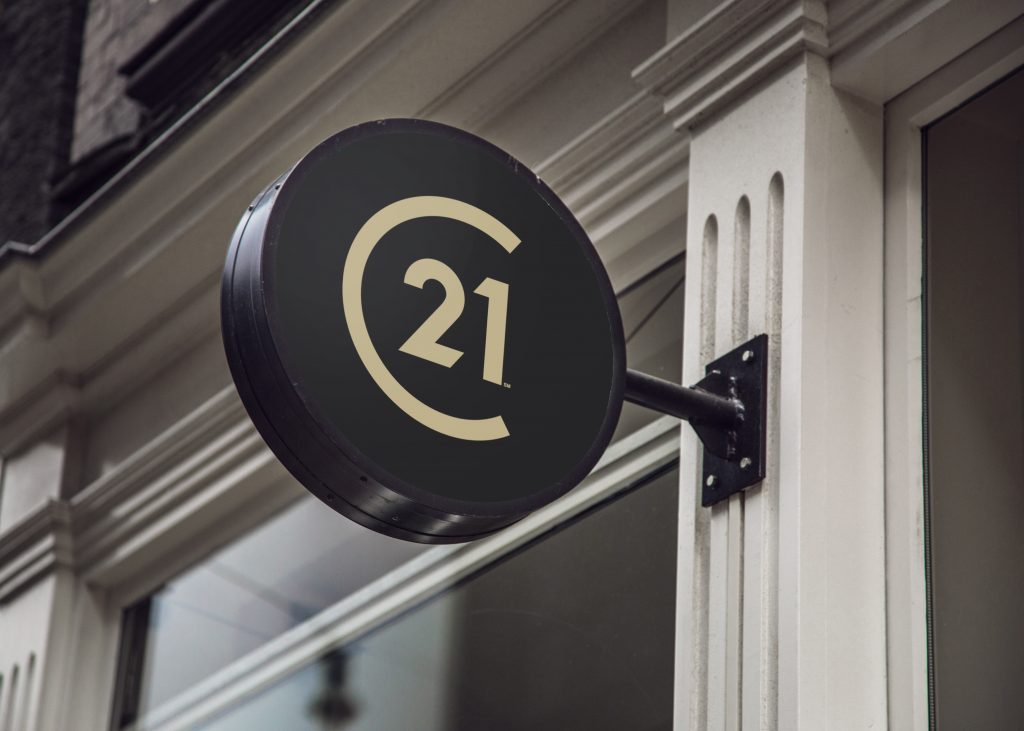
The Power of Brand Recognition in Real Estate
Brand recognition is the ability of consumers to identify a brand by its visual elements, logo, colors, design, without needing to see the company name. It's the ultimate test of marketing success: can your mark stand alone and still communicate everything your business represents?
For real estate professionals, brand recognition translates directly into tangible business advantages:
- Instant credibility with potential clients who've never met you
- Reduced marketing costs because the logo does the preliminary work
- Built-in trust that takes individual agents years to establish on their own
- Clear market differentiation in a crowded field of competitors
When a consumer sees a recognized logo, they're not just seeing a symbol. They're accessing years of advertising, positive experiences, and cultural associations compressed into a single visual moment.
The Science Behind Logo Recognition
A Century 21 real estate yard sign in gold and black, signifying market presence, stability, and a proven track record in the industry.
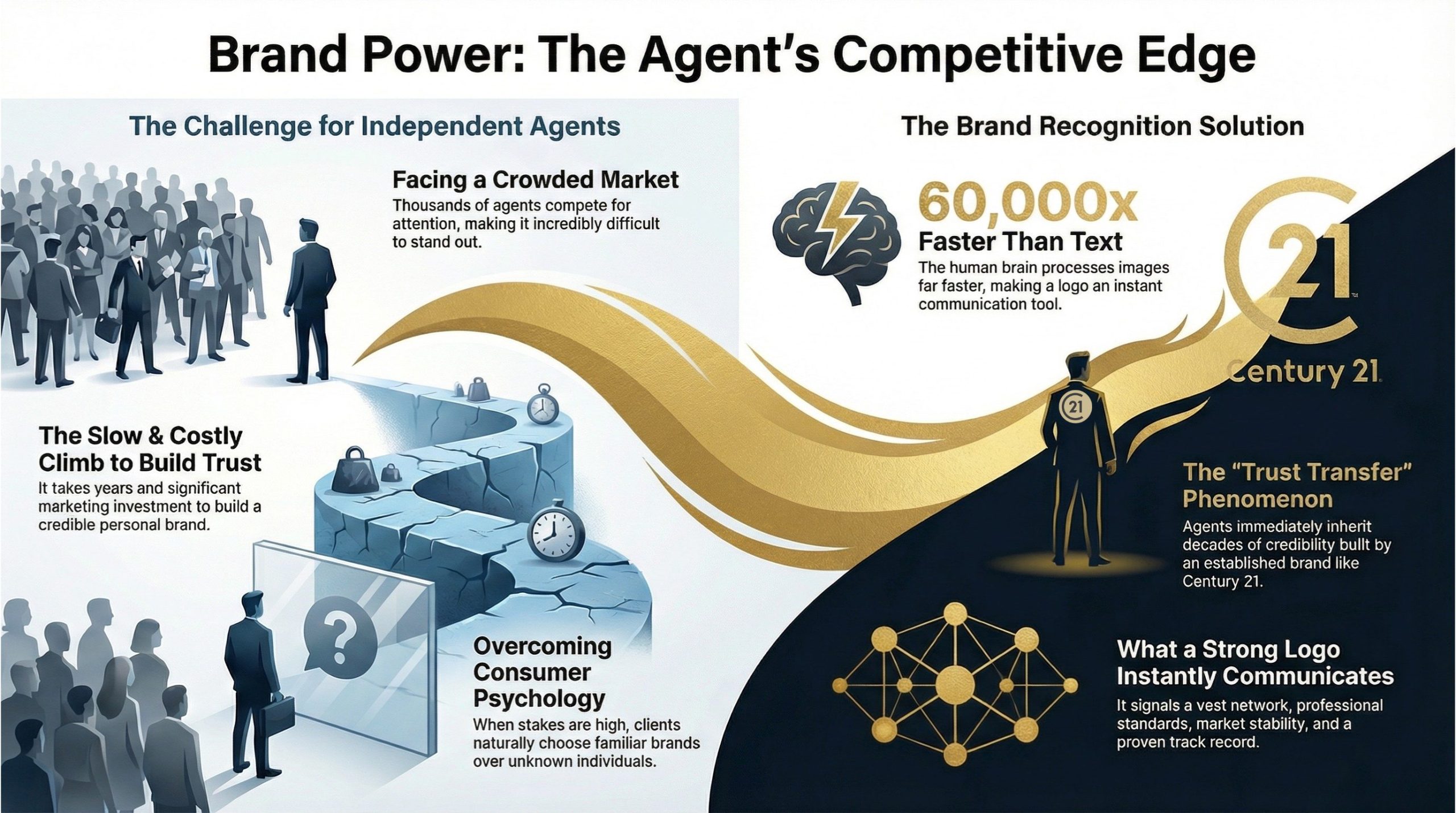
Research in consumer psychology tells us that humans process images 60,000 times faster than text. Our brains are wired for visual pattern recognition -- it's a survival mechanism that great brands have learned to leverage brilliantly.
The most effective logos share three traits: simplicity, consistency, and emotional resonance. Complex designs don't lodge in memory. The swoosh, the Amazon arrow, the C21 emblem -- all clean, distinctive, and impossible to confuse with a competitor. They've also maintained visual coherence across decades, because the most powerful brands resist the temptation to reinvent themselves. And great logos trigger feelings, not just recognition. Century 21 communicates professionalism and established expertise the moment it registers.
The Century 21 Advantage: A Case Study in Brand Power
The C21 logo is one of the most recognized marks in real estate. Without spelling out a single word, that distinctive gold and black design communicates a complete value proposition to consumers.
50 Years of Brand Building in Canada
In 2025, Century 21 Canada marked a milestone that few real estate brands anywhere in the world can claim: 50 years of continuous operation in the Canadian market. That kind of longevity isn't luck, it's the result of consistent service, rigorous standards, and a brand that Canadians have trusted through every market cycle, recession, and boom the country has seen since the mid-1970s.
The numbers behind that half-century of presence are striking. Century 21 Canada now counts more than 11,700 network members operating out of approximately 400 offices across 272 cities from coast to coast. Globally, the brand extends to over 125,000 agents in 79 countries, making the C21 logo one of the most recognized real estate marks on the planet.
For agents considering where to hang their license in Nova Scotia, those figures aren't just impressive trivia. They represent the depth of a referral network, the scale of brand advertising investment, and the weight of a reputation built across five decades. When a client sees that gold and black emblem, they're responding to 50 years of earned recognition, and that recognition goes to work for you from day one.
When a potential buyer or seller sees an agent wearing C21 branding or spots a familiar yard sign, several powerful messages register instantly:
Established network. This isn't a solo practitioner working alone. It's access to a vast network of resources, listings, and professional connections built over decades.
Professional standards. Major brands maintain training requirements and quality controls. The logo serves as shorthand for competence and accountability -- something that matters enormously to clients making one of the largest financial decisions of their lives.
Market presence and stability. The recognized brand signals staying power in an industry where fly-by-night operators are common.
Proven track record. The C21 logo has been present at countless successful transactions. Consumers assume a brand this established wouldn't have survived unless it consistently delivered results.
The Economics of Recognition: ROI on Brand Equity
Brand recognition delivers measurable financial advantages that compound over time.
Every marketing dollar works harder when your logo is already known. A C21 yard sign doesn't just advertise one property -- it reinforces the brand with every passerby. An agent in branded apparel isn't just identifying themselves; they're activating years of national advertising campaigns in the minds of everyone who sees them.
Independent agents must invest heavily in establishing personal brand equity from scratch. If you're wondering how much it costs to become a Realtor in Nova Scotia, consider that affiliating with a recognized brand offsets a significant chunk of the marketing spend you'd otherwise carry alone.
The Trust Transfer Phenomenon
Perhaps the most valuable aspect of brand recognition is trust transfer. When a new agent affiliates with Century 21, they immediately inherit the credibility that the brand has built over decades. A first-year agent with the C21 logo behind them has a dramatically different conversation with potential clients than an unaffiliated newcomer trying to establish themselves from nothing.
This is especially crucial in real estate, where transactions involve enormous sums of money and life-changing decisions. Consumers naturally gravitate toward familiar brands when the stakes are high.
Beyond Words: The Universal Language of Logos
One often-overlooked advantage of wordless brand marks is their universality. Text-based logos face translation challenges and literacy barriers. Visual marks transcend these limitations.
The C21 emblem works equally well across diverse markets and multicultural communities. It requires no translation, no explanation -- just recognition. In an increasingly diverse real estate market like Halifax-Dartmouth, that linguistic neutrality is a genuine competitive advantage.
Building and Maintaining Brand Recognition
What separates successful brand marks from forgotten logos? A few factors determine whether a brand achieves lasting recognition.
Consistency over time is non-negotiable. Frequent redesigns reset the recognition clock. Omnipresence matters too -- recognition requires repetition across yard signs, business cards, digital platforms, and community presence. Quality association is critical, because no amount of visibility can save a brand linked to poor service. And strategic visibility ensures the brand appears where the target audience naturally looks.
The Competitive Edge in a Crowded Market
The real estate industry is extraordinarily competitive. Hundreds of agents compete for consumer attention in every major market. In this environment, brand recognition provides crucial differentiation.
When a consumer decides to buy or sell, they face an overwhelming range of potential agents. Most will default to familiar brands -- not because they've researched comparative performance, but because recognition creates a perception of safety. This heuristic is deeply embedded in human psychology. It's one of the most compelling reasons why joining Century 21 Optimum Realty gives new and experienced agents alike such a meaningful head start.
Your Brand Power Starts Day One
When you affiliate with Century 21 Optimum Realty, you're not starting from scratch. You're stepping into a position of strength that takes independent agents years to build.
From your first client meeting, you carry the weight of one of the most recognized brands in real estate. That C21 logo on your business card, your yard signs, and your marketing materials isn't decoration. It's decades of brand equity working on your behalf.
The benefits are immediate:
Instant credibility. Before you've said a word about your experience or qualifications, the C21 brand has already established you as a serious professional.
National brand, local expertise. You combine the resources of a global brand with the market knowledge and community connections of a locally owned Nova Scotia brokerage.
Marketing leverage. Every national Century 21 advertisement reinforces your local presence, priming consumers to trust you when they encounter C21 marketing.
Professional support infrastructure. Training, tools, and systems that amplify your effectiveness while the logo amplifies your credibility.
Competitive advantage. In a market where dozens of agents compete for the same clients, arriving with instant name recognition is often the deciding factor.
If you're still in the research stage, a natural next step is understanding how long it takes to become a Realtor in Nova Scotia and what the Salesperson Licensing Course actually involves. Once you understand the path, the brokerage decision becomes the most important choice you'll make.
From Recognition to Relationship
It's worth being clear: brand recognition opens doors -- it doesn't close deals. The C21 logo gets agents into conversations they might otherwise never have, but individual performance determines outcomes.
The most successful real estate professionals understand this dynamic. They leverage brand recognition to establish initial credibility, then build on that foundation with personal expertise, local knowledge, and exceptional service.
The brand creates opportunity. The agent creates loyalty.
The Future of Brand Recognition in Real Estate
As digital marketing evolves and consumer attention becomes increasingly fragmented, strong brand recognition becomes even more valuable. In a world of infinite scroll and constant distraction, familiar marks cut through the noise.
The principles that made the C21 logo powerful decades ago remain relevant today, perhaps more so. Simplicity, consistency, and positive association never go out of style.
Conclusion: The Silent Power of Recognition
The Nike swoosh doesn't need to explain athletic excellence. The Amazon arrow doesn't need to spell out customer satisfaction. And the Century 21 logo doesn't need to announce real estate expertise.
For real estate professionals, understanding and leveraging brand recognition isn't optional, it's fundamental to competitive success. The C21 logo represents decades of brand building, significant advertising investment, and countless successful transactions. Agents who align themselves with recognized brands don't just benefit from these assets -- they become part of an ongoing story of credibility and achievement.
In an industry built on trust, where decisions involve life savings and family futures, the power of a recognized brand cannot be overstated.
The most powerful brands don't need words. They just need recognition. And that recognition, built over decades and maintained through consistency, becomes the foundation for every successful transaction that follows.
Frequently Asked Questions
Does it really matter which brokerage brand I join as a new Realtor in Nova Scotia? Yes, significantly. In real estate, trust is the product, and brand recognition shortcuts the trust-building process. A new agent affiliated with a nationally recognized brand like Century 21 arrives at their first client meeting with built-in credibility. An unaffiliated agent has to earn that same credibility from scratch, which takes time and marketing dollars most new agents don't have.
How does Century 21's brand recognition translate into actual business for agents? In practical terms, it means more doors opened, more calls returned, and more referrals from clients who already associate the brand with professionalism. The C21 logo on a yard sign, business card, or social media profile does passive marketing work 24/7, reinforcing every national advertising campaign the brand runs at no additional cost to the individual agent.
Is brand recognition more important for new agents or experienced ones? Both benefit, but in different ways. New agents gain instant credibility they haven't had time to build personally. Experienced agents gain marketing leverage and a broader referral network that amplifies the reputation they've already built. At Century 21 Optimum Realty, we work with both, if you're considering a career in real estate or you're an experienced Realtor looking to level up, the brand advantage works for you.
Can I build a strong personal brand while working under a recognized brokerage brand? Absolutely -- and it's actually easier. The brokerage brand handles foundational credibility, which frees you to focus your personal branding energy on what makes you distinctive: your local market knowledge, your niche, your communication style, your community involvement. The two brands work together, not against each other.
How do I get started with Century 21 Optimum Realty in Nova Scotia? If you're not yet licensed, the first step is completing the Salesperson Licensing Course for Nova Scotia. If you're already licensed and looking to make a move, we'd love to have a conversation, visit our Join Us page or reach out directly to learn more about what Century 21 Optimum Realty offers its agents.
Ready to explore a career?
CENTURY 21 Optimum Realty
INFO & SERVICES
CENTURY 21 Optimum Realty
24 Logiealmond Close, Unit 24, Dartmouth, NS B3B0C8
(902) 444-1333
INFO & SERVICES

Independently Owned and Operated. ®/™ trademarks owned by Century 21 Real Estate LLC used under license or authorized sub-license. © 2020 Century 21 Canada Limited Partnership © 2020 Century 21 Canada Limited Partnership
The trademarks MLS®, Multiple Listing Service® and the associated logos identify professional services rendered by REALTOR® members of CREA to effect the purchase, sale and lease of real estate as part of a cooperative selling system. The trademarks REALTOR ® , REALTORS ® and the REALTOR ® logo are controlled by The Canadian Real Estate Association (CREA) and identify real estate professionals who are members of CREA. Used under license. This listing content provided by REALTOR.ca has been licensed by REALTOR® members of The Canadian Real Estate Association. Not intended to solicit properties currently listed for sale or buyers under contract.
Century 21 Canada Limited Partnership currently has franchise opportunities available in select markets across Canada. The intent of this communication is for informational purposes only and is not intended to be a solicitation to anyone under contract with another real estate brokerage operation. This e-mail message contains confidential information intended only for the use of the individual or entity named above. Any unauthorized use or disclosure is strictly prohibited. If you have received this communication in error please immediately delete the e-mail and either notify the sender at the above e-mail address or by telephone.
© 2024 MoxiWorks
