Facebook
 X
X
 Pinterest
 Copy Link
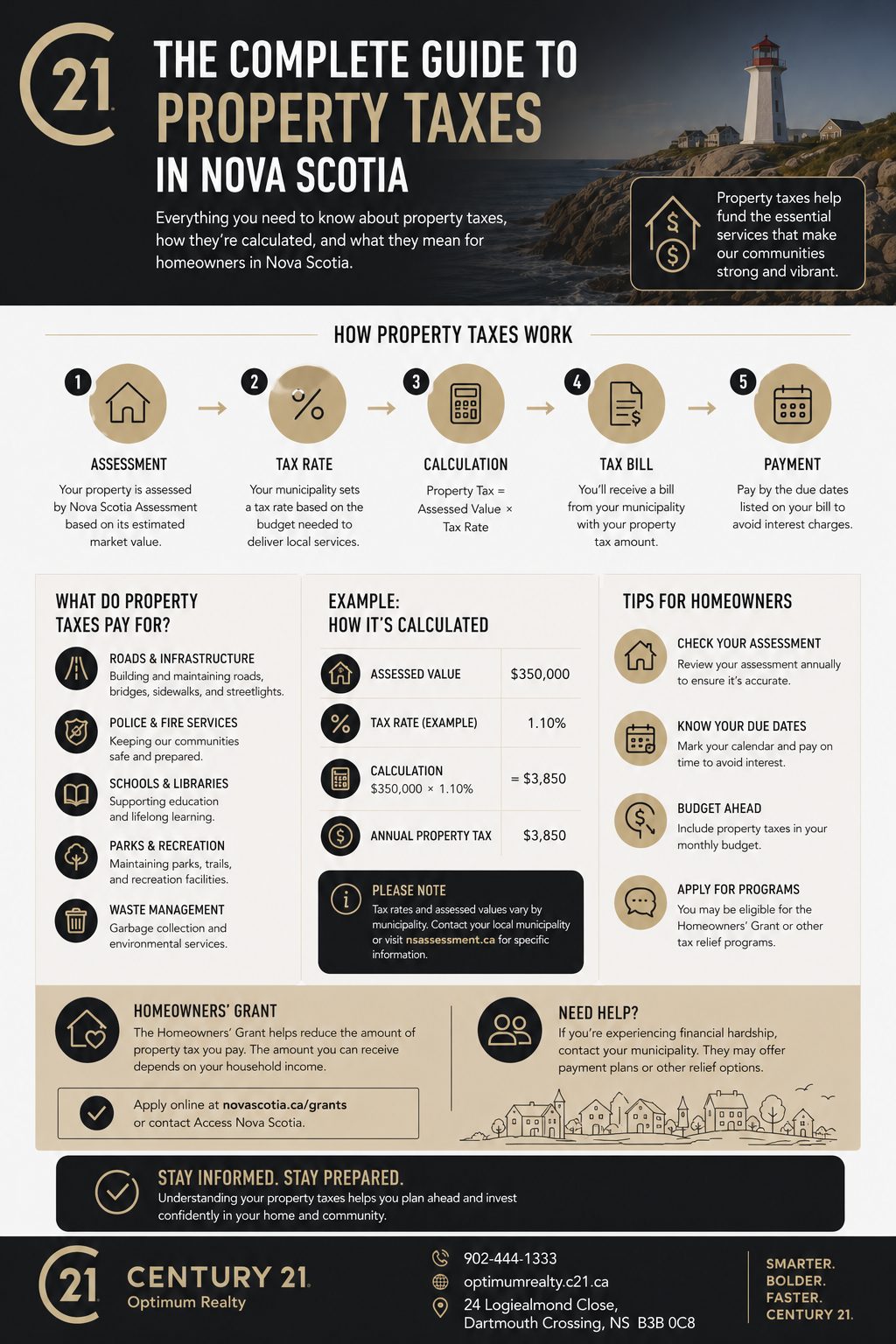
The Complete Guide to Property Taxes in Nova Scotia: What Every Homeowner and Buyer Needs to Know in 2026
Last updated: April 2026 | Tax rate examples in this guide reflect 2025 data. Municipal rates and CAP percentages are updated annually, always confirm current figures with your municipality and PVSC.
Are you buying your first home in Nova Scotia or trying to understand your property tax bill? You’re not alone. Property taxes are one of the largest ongoing expenses for homeowners, yet many people don’t fully understand how they’re calculated or what programs might help reduce their burden.
This comprehensive guide breaks down everything you need to know about Nova Scotia’s property tax system, including the money-saving Capped Assessment Program that could significantly impact your tax bill.
How Property Taxes Work in Nova Scotia: The Basics
Property taxes in Nova Scotia fund essential municipal services like roads, water systems, fire protection, and community facilities. Unlike income taxes, property taxes are calculated based on your property’s assessed value rather than your ability to pay.
Here’s the simple formula every Nova Scotia property owner should know:
Property Tax = Assessed Value × Municipal Tax Rate
But as you’ll see, there’s more to the story thanks to special programs designed to protect homeowners.
Who’s Responsible for Your Property Tax Bill?
Three key organizations work together to determine and collect your property taxes:
Property Valuation Services Corporation (PVSC)
- Assesses every property in Nova Scotia annually
- Uses market value as of January 1st of the previous year
- Determines your property’s assessed value
Your Municipality
- Sets local tax rates (which vary significantly across the province)
- Calculates your actual tax bill
- Issues bills and collects payments
- May add area rates for specific services
Nova Scotia Government
- Creates property tax legislation
- Oversees programs like the Capped Assessment Program
- Sets provincial education tax rates
Understanding Property Assessment: How Your Home’s Value is Determined
PVSC uses three main methods to assess your property’s value:
Market Approach (Most Common for Residential Properties) Your home’s value is based on recent sale prices of similar properties in your area. This reflects what buyers are actually willing to pay.
Income Approach (For Rental Properties) Used for apartments and commercial buildings based on the income they generate.
Cost Approach (For Unique Properties) When there aren’t enough comparable sales, assessors estimate what it would cost to rebuild your property, minus depreciation.
The Capped Assessment Program: Nova Scotia’s Property Tax Protection
Nova Scotia’s Capped Assessment Program (CAP) is one of the most important features of the provincial property tax system, yet many homeowners don’t fully understand how it works.
What is the CAP?
Introduced in 2005, the CAP protects owner-occupied homeowners from sudden tax increases when property values rise rapidly. Instead of your taxes jumping dramatically with market increases, your assessed value for tax purposes can only increase by the Nova Scotia Consumer Price Index (CPI) each year.
CAP Eligibility Requirements
To qualify for the CAP, you must:
- Own and live in your home as your primary residence
- Have lived in the property for at least one year
- The property must be residential (not commercial)
Important: New construction and non-owner-occupied properties don’t qualify for the CAP.
How the CAP Saves You Money
PVSC publishes the CAP rate annually based on Nova Scotia’s CPI. Recent published rates have been: 3.2% for 2024, 1.5% for 2025, and 2.6% for 2026. This means your assessed value for tax purposes can only rise by that percentage each year, regardless of how much your market value increases.
Example (illustrative only): If your home’s market value jumped from $350,000 to $420,000 in one year, but you’re protected by the CAP, your assessed value for tax purposes might only increase by the applicable CAP rate for that year, potentially a fraction of the actual market movement.
Always check PVSC’s website for the current year’s CAP percentage before estimating your tax bill.
When the CAP Resets
The protection ends when:
- You sell the property
- You complete major renovations
- The property changes from owner-occupied to rental
Buyer Beware: When you purchase a home that was previously capped, your taxes will be calculated based on current market value, potentially resulting in a significant increase from what the previous owner paid. This is one of the most important things to research before making an offer.
2025 Sample Property Tax Rates Across Nova Scotia
Tax rates vary significantly depending on where you live. The table below shows 2025 sample rates for reference only, Halifax and other municipalities have since approved budget changes for 2025–26 and 2026–27. Always check your municipality’s current website for the rate that applies to your tax bill.
| Municipality | Residential Rate (per $100) | Commercial Rate (per $100) |
|---|---|---|
| Halifax (Urban) | $0.661 | $2.738 |
| Lunenburg District | $0.81 | $1.957 |
| Colchester | $0.885 | $2.28 |
Note: Halifax Regional Municipality has approved meaningful tax bill increases in both its 2025 and 2026–27 budgets. These sample figures are no longer current for HRM and are shown for illustrative purposes only.
Remember: Additional area rates may apply for services like fire protection, public transit, community facilities, and provincial education taxes.
Calculating Your Property Tax: A Real Example
Let’s walk through a typical calculation for a Halifax property:
Property Details:
- Assessed value: $400,000
- Location: Urban Halifax
- Municipal rate: $0.661 per $100 (2025 sample rate — confirm current rate with HRM)
Calculation: $400,000 ÷ 100 × $0.661 = $2,644 in municipal taxes
Plus any applicable area rates for additional services.
A Note on Deed Transfer Tax (Non-Resident Buyers)
Property tax is an ongoing annual cost, but buyers should also be aware of a separate one-time cost: the Deed Transfer Tax, paid at closing when you purchase a property.
Nova Scotia increased the Non-Resident Deed Transfer Tax from 5% to 10% effective April 1, 2025, for non-resident buyers of residential property, unless the buyer relocates to Nova Scotia within six months. If you’re a Nova Scotia resident purchasing a home, the standard municipal deed transfer tax applies instead.
This is distinct from your annual property tax bill, but it’s a meaningful upfront cost to account for in your buying budget. Your real estate lawyer will confirm which rate applies to your purchase.
Property Tax Bills and Payment in Nova Scotia
When You’ll Receive Your Bill
Most municipalities issue property tax bills once or twice per year. Due dates and instalment options vary, always check your municipality’s specific billing schedule, as it differs across HRM, Colchester, East Hants, and other areas.
Late Payment Penalties
Don’t miss these deadlines. Late payments typically incur daily interest at 15% per annum, which adds up quickly.
Available Rebates and Exemptions
Some municipalities offer property tax relief for low-income residents, senior citizens, veterans, and properties with accessibility modifications. Check with your local municipality to see what programs are available in your area.
Essential Tips for Property Buyers
If you’re buying property in Nova Scotia, keep these important points in mind.
Before You Buy
- Check if the property is capped This information is crucial for estimating your future tax liability
- Use online tools like mypropertyreport.ca to compare capped and market values
- Request a tax estimate from the municipality before closing
- Factor in potential increases if the cap will reset after your purchase
If you’re a first-time buyer, it’s also worth reviewing Nova Scotia’s 2% Down Payment Program and the full range of federal and provincial programs available to you, your total cost of ownership includes property tax, and knowing these programs can affect how much home you can afford.
After Purchase
- Understand that your taxes may be higher than the previous owner’s if they benefited from the CAP
- Keep records of any major home improvements that might affect your assessment
- Consider appealing your assessment if you believe it’s inaccurate
How to Research Property Values and Taxes
Before buying or if you’re questioning your current assessment, these resources can help:
- mypropertyreport.ca — Compare capped and market values
- Your municipality’s website — Find current tax rates and area charges
- PVSC website — Understand assessment methods and appeal processes
- Nova Scotia market statistics — Track local price trends to understand whether your assessment reflects current market conditions
Understanding Assessment Appeals
If you believe your property has been over-assessed, you have the right to appeal. The process typically involves:
- Reviewing your assessment notice carefully
- Gathering evidence of your property’s actual value
- Filing an appeal within the specified timeframe
- Presenting your case to an assessment review board
The Impact of Market Changes on Property Taxes
Nova Scotia’s real estate market has seen significant changes in recent years, average sale prices have climbed substantially since 2021, with the provincial average now sitting in the mid-$460,000 range as of early 2026. You can see the full picture in our Nova Scotia Real Estate Market Statistics 2025 year-end report.
While the CAP protects existing homeowners, new buyers face the reality of current market values. This creates a two-tiered system where:
- Long-term homeowners with capped assessments pay lower taxes
- New homeowners pay taxes based on current market values
- The tax burden increasingly shifts to newer residents
Planning for Property Tax Increases
Whether you’re a current homeowner or prospective buyer, it’s wise to plan for potential tax increases.
For Current Homeowners
- Budget for annual CAP rate increases each year (PVSC publishes the rate in January)
- Be prepared for reassessment after major renovations
- Consider the tax implications before selling and buying elsewhere
For Buyers
- Factor property taxes into your overall housing budget
- Don’t rely on the seller’s current tax bill for your planning
- Get official tax estimates from the municipality
- If you’re thinking about selling to buy elsewhere, review our seller’s guide to understand the full financial picture
Frequently Asked Questions
Q: Can I get the CAP on a second home or cottage? A: No, the CAP only applies to your primary residence where you live year-round.
Q: What happens to my CAP if I rent out part of my home? A: As long as you live in the home as your primary residence, partial rental doesn’t affect your CAP eligibility.
Q: How do I know if a property I’m buying is currently capped? A: Check the property report at mypropertyreport.ca or ask your real estate agent to verify the capped vs. market value.
Q: Can property taxes be included in my mortgage payment? A: Yes, many lenders offer escrow services where they collect property taxes monthly and pay them on your behalf. Speak with your lender or mortgage broker about this option when getting pre-approved.
Conclusion: Making Informed Property Decisions in Nova Scotia
Understanding Nova Scotia’s property tax system is essential for making smart real estate decisions. The Capped Assessment Program provides valuable protection for long-term homeowners, but buyers need to understand the full tax implications of their purchase — including what the CAP reset means for their budget on day one.
Key takeaways:
- Property taxes are calculated using assessed value and municipal tax rates
- The CAP can significantly reduce tax burden for eligible homeowners, but the rate changes annually based on CPI; check PVSC’s site each January for the current figure
- Tax rates vary substantially across different municipalities, and several have increased meaningfully in 2025–26
- Non-resident buyers face an increased deed transfer tax of 10% since April 2025
- New buyers should expect to pay taxes based on current market values
- Professional advice and thorough research are essential before major property decisions
Whether you’re buying your first home or your fifth, taking time to understand the property tax implications will help you make better financial decisions and avoid unwelcome surprises. If you’d like to talk through how property taxes factor into a specific purchase, our team is happy to help.
For the most current tax rates, CAP percentages, and regulations, always consult your local municipality and PVSC directly, and consider speaking with a qualified real estate professional or tax advisor.
By Rob Lough, Broker/Owner | Century 21 Optimum Realty | Halifax-Dartmouth, Nova Scotia